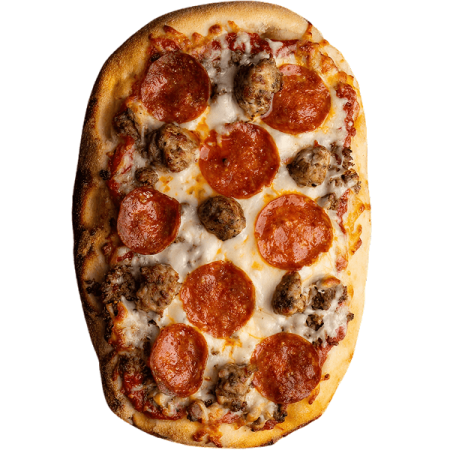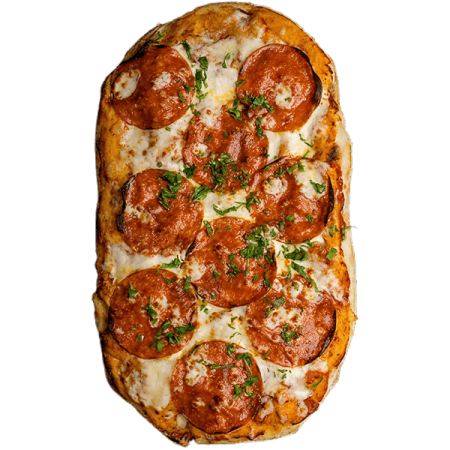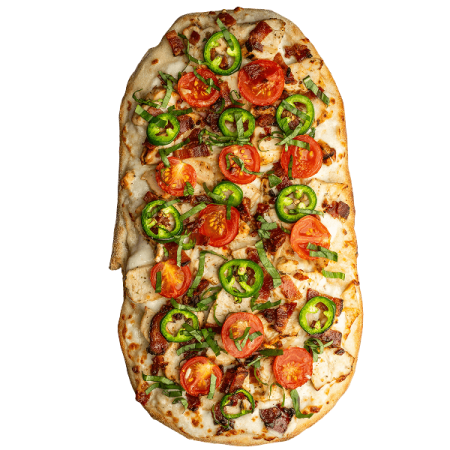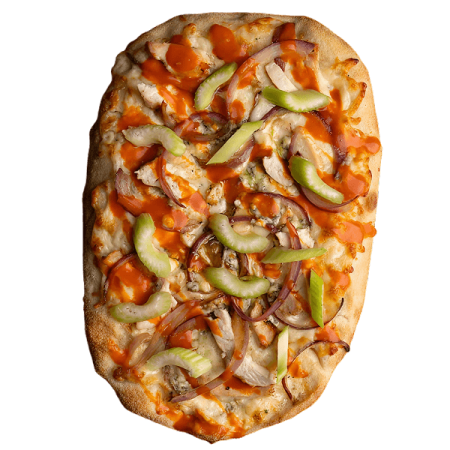
Most people think pizza is pizza. But the dough tells a completely different story.
Walk into any pizza place and you’ll find the same thing: refined white flour, seed oils, a crust that spikes your blood sugar and leaves you in a food coma an hour later. Nobody talks about it because pizza is comfort food… and nobody wants to ruin comfort food.
But here’s the thing. The Roman bakers who invented Pinsa romano weren’t trying to make “healthy pizza.” They were just making bread the right way. Cold-fermented over 48-72 hours. A blend of flours, wheat, soy, rice, that creates a lighter, crispier, more complex structure. No shortcuts. No seed oils. No preservatives.
The result just happened to be better for you.
What sets Pinsa apart right away
Traditional pizza dough is typically made fast. Warm water, yeast, flour, oil (usually canola or soybean), mixed and proofed in a couple hours. That speed comes at a cost; less fermentation means more gluten stress on digestion, a denser crumb, and a heavier glycemic hit.
Pinsa takes the opposite approach. The long cold fermentation (sometimes up to 72 hours) breaks down a significant portion of the gluten and starches before the crust ever sees heat. That’s not a marketing claim. That’s just biology. Fermentation is pre-digestion. The microbes do work so your gut doesn’t have to.
The flour blend matters too. Rice flour adds lightness and crispness. The multi-grain approach means the dough absorbs less fat during cooking, which is part of why pinsa can come in at meaningfully fewer calories than a comparable slice of traditional pizza.
The seed oil problem nobody’s talking about
If you’ve spent any time paying attention to nutrition in the last few years, you’ve probably heard the seed oil conversation. Canola, soybean, sunflower; these highly processed vegetable oils are in almost everything, including most commercial pizza dough and sauce.
MegaFit’s pinsas are 100% seed oil-free. The crust uses olive oil, the same oil Roman bakers have used for centuries, which behaves completely differently in the body. It’s not just a label claim. It’s a foundational choice about what goes into the food.
The texture argument (because taste matters)
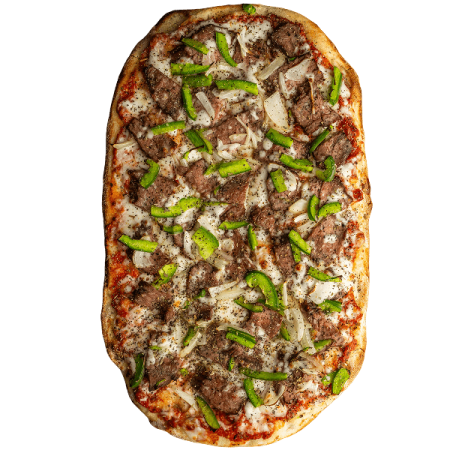
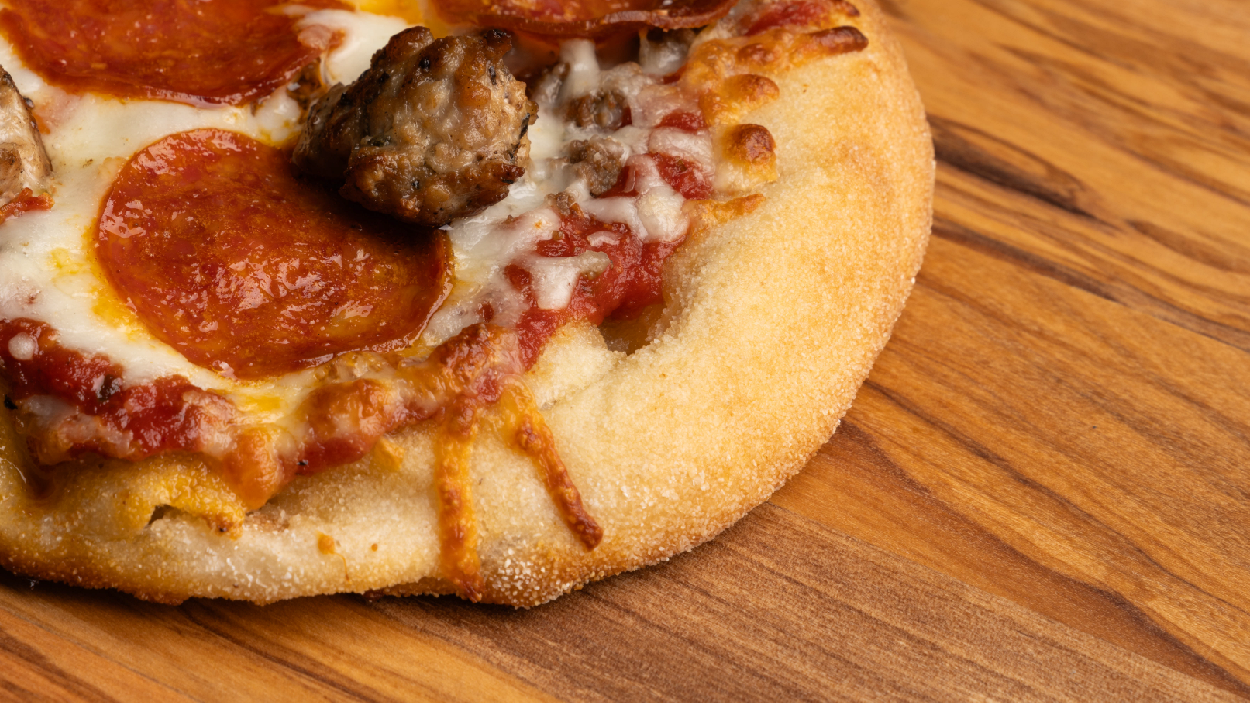
Beyond nutrition, pinsa just eats differently. The hydration level in pinsa dough is significantly higher than traditional pizza, sometimes 80% or more compared to 55-65% for typical Neapolitan dough. More water means more steam during baking, which creates that signature airy interior with a crackly, blistered exterior.
It’s lighter. You can eat it without that “brick in your stomach” feeling. That’s not a coincidence, it’s the whole point.
So why doesn’t everyone just make pinsa?
Time and cost. A properly fermented pinsa dough takes days, not hours. The flour blend is more expensive than standard bread flour. And hand-pressing each crust; rather than tossing or sheeting it, takes skill.
It’s just harder to scale. Which is why most pizza stays the way it is.
The bottom line
Pinsa isn’t a diet food. It’s not a compromise. It’s what pizza looks like when you don’t cut corners on the process, and it happens to check every box that matters: less gluten, no seed oils, no added sugars, no preservatives, more protein.
If you’ve written off pizza as a cheat meal, pinsa is worth a second look. The crust has been the problem all along.